THE CHARACTER OF THE HOUSE
The past,
to be lived.
White walls, well-worn wood and the memory of an old garden. In the oldest part of the house, every object has a story to tell.
01 / 1910 style
In the oldest heart of the house
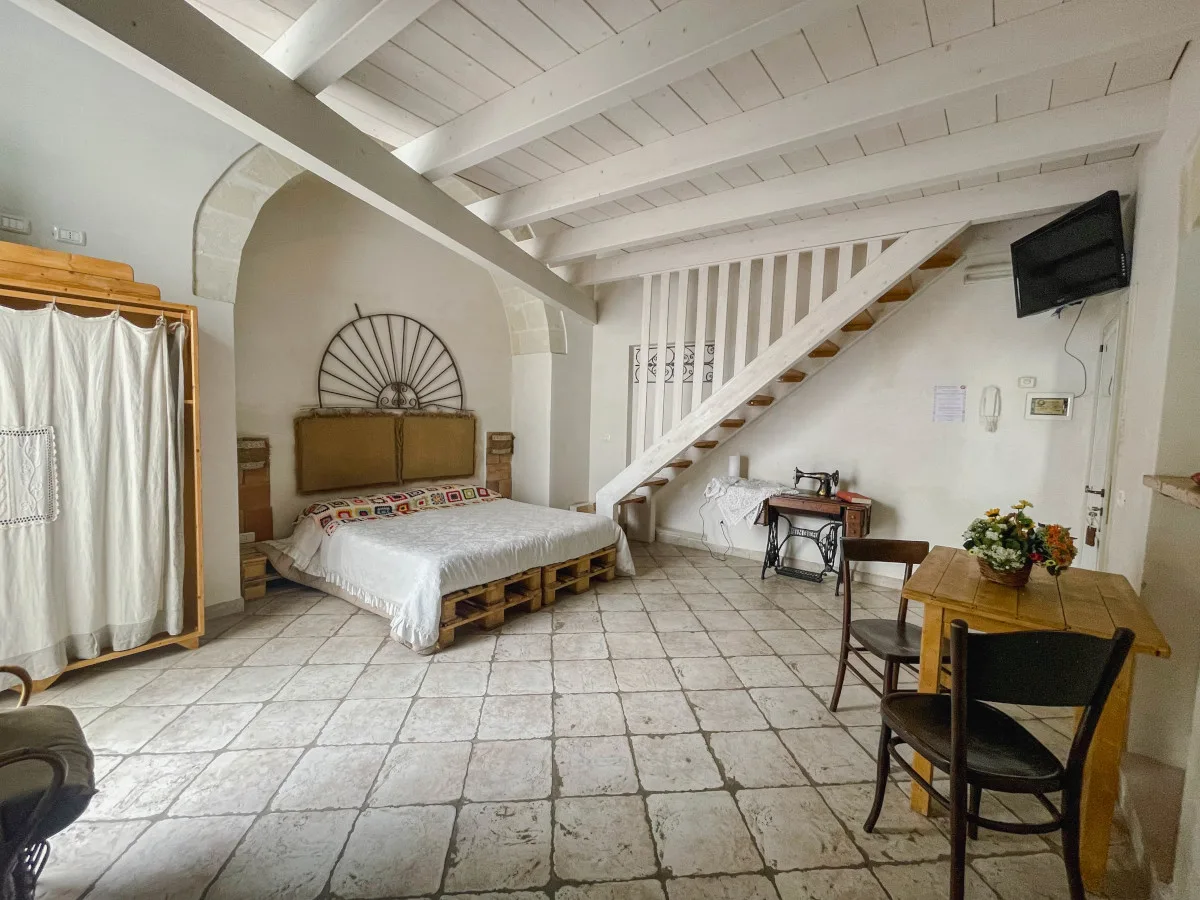
The ’910 lives in the oldest core of Novecento. White walls and the scent of things from another time accompany you in from the small veranda, created where a garden once stood. Here a wooden staircase, more than a century old, led to a room of the old alcove known as the arùuv: a hiding place for oil, cured meats, pulses and wheat, kept out of sight of the duty collectors.
Today the house is arranged over two levels, with a wooden mezzanine, a separate kitchen and a courtyard furnished with a bench, chairs and a table. The rooms keep their intimacy and the memory of farming life, alongside a private bathroom, air conditioning, a smart monitor, heating and a safe.
02 / 1910 style
Objects that change their lives
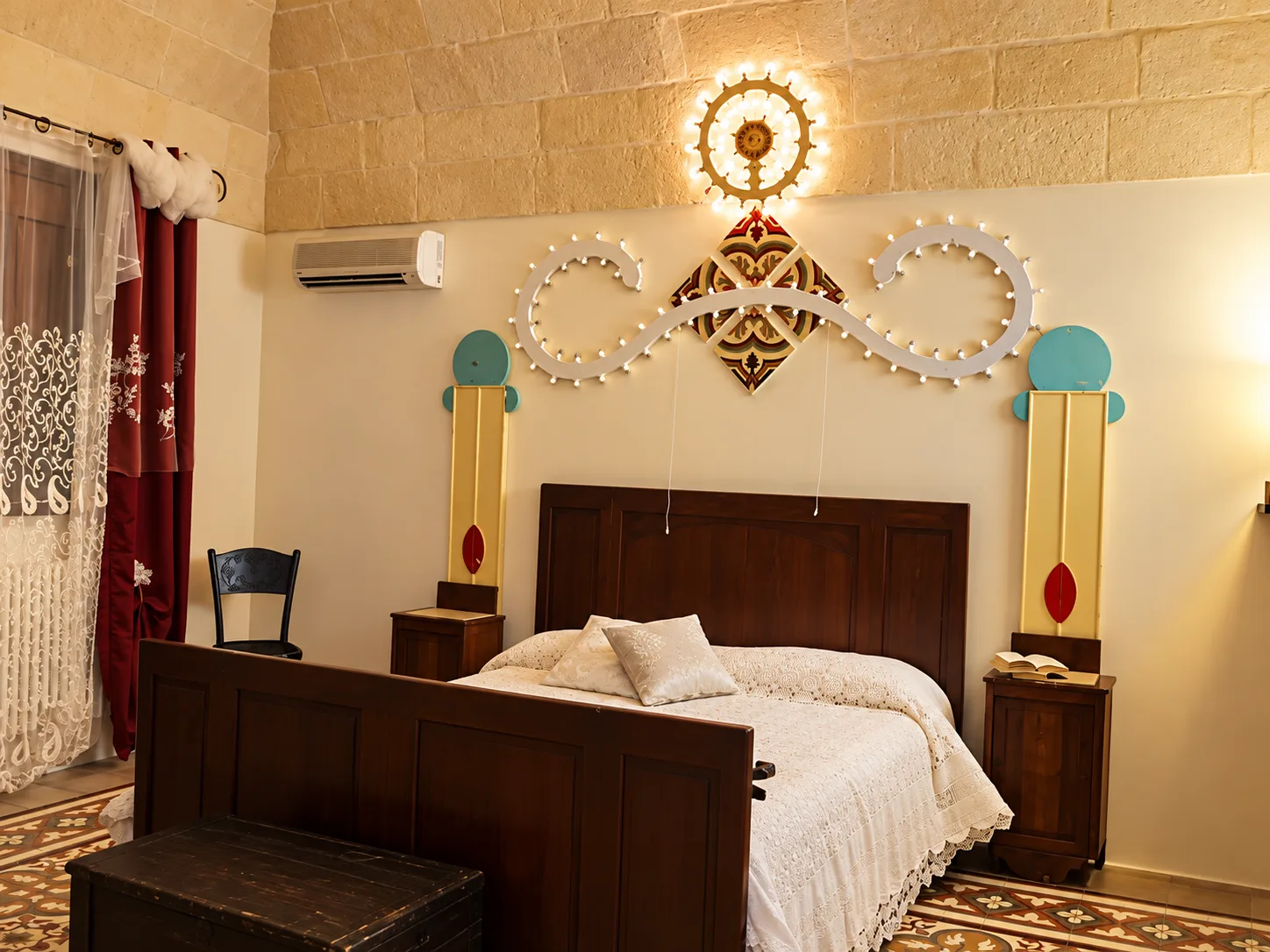
The bed frames are made from reclaimed and reassembled EPAL EUR pallets, next to a 1910 sewing machine and a picture of the countryside, among olive trees and ripe wheat. A nineteenth-century wrought-iron fanlight, once set above a great door, becomes the headboard of the main bed; two large cushions made from jute sacks soften its lines.
The wall lamps are glass jars covered in rough sackcloth: inside, white broad beans, beans and lentils make the light part of the story. The orange curtains follow old patterns, with ribbons and ties instead of modern fastenings.
03 / 1910 style
The kitchen, everyday memory
Recycled, treated wood, decorated cement tiles on the front and a chandelier of coloured shells woven with wire make up a kitchen with a homely character. The white enamelled gas hob, with its wooden handles, recalls the years when this room was the centre of the house. On the shelves, a pan scale from 1910–1915 remembers the weighing of pasta and pulses.
The plate rack was born from a wooden shovel and a hay fork, joined with jute and rough twine: it holds period aluminium pans, ladles and colanders. Even the stricatùr, the grooved wooden board once used for washing clothes, is given a new role and becomes a breakfast tray.
04 / 1910 style
Between passages and vaults
The bathroom occupies the old passage between bedroom and kitchen; the shower is set exactly where the corridor narrowed. Fruit crates turn into furniture, a straw rake into a bathrobe hook and a ceramic capasella jar into a basket. An old ladder for the olive harvest, fixed horizontally, becomes the towel rail.
On the mezzanine the natural wood of the pallets meets the old vault, close enough to touch. Rough nets and white linen are woven into a canopy, while large glass demijohns, once used for olives and oil, give off a green light. In the next room the craftwork on reclaimed wood continues: a country ladder used for pruning olive trees is reused to reach the upper level of the sleeping area.