THE CHARACTER OF THE HOUSE
The past,
to be lived.
The old stable becomes a house full of light. A sideboard, embroidery and country objects hold the gentleness of a suspended time.
01 / 1920 style
From stable to a house of light
Animals and the carts used to carry wheat once sheltered here. The great stable door has become a bright opening in the kitchen, keeping the memory of its original use. The house offers a sleeping area with a double bed and two singles on the mezzanine; a sofa bed stands in the kitchen, which has a hob. A bathroom, air conditioning, a smart monitor, heating and a safe complete the spaces.
02 / 1920 style
The smell of bread, the colour of shawls
The 1920s sideboard recalls freshly baked bread, wrapped in tea towels by grandmother. The pale wooden ceiling is dotted with baskets turned into lampshades. An EPAL pallet cut lengthways becomes a plate rack: it holds early twentieth-century ceramic plates, jugs and cups, a reminder of the dish shared around the family table.
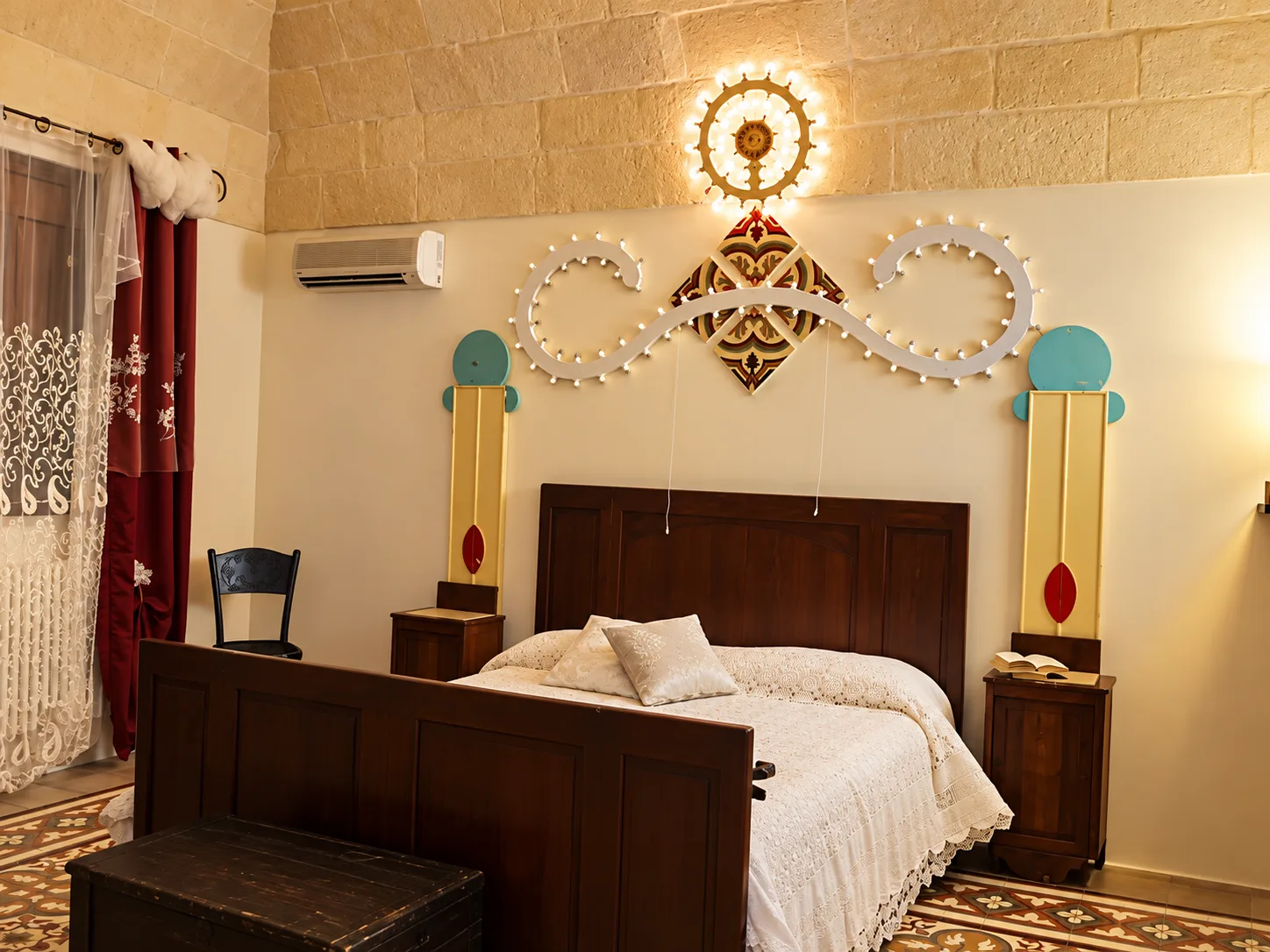
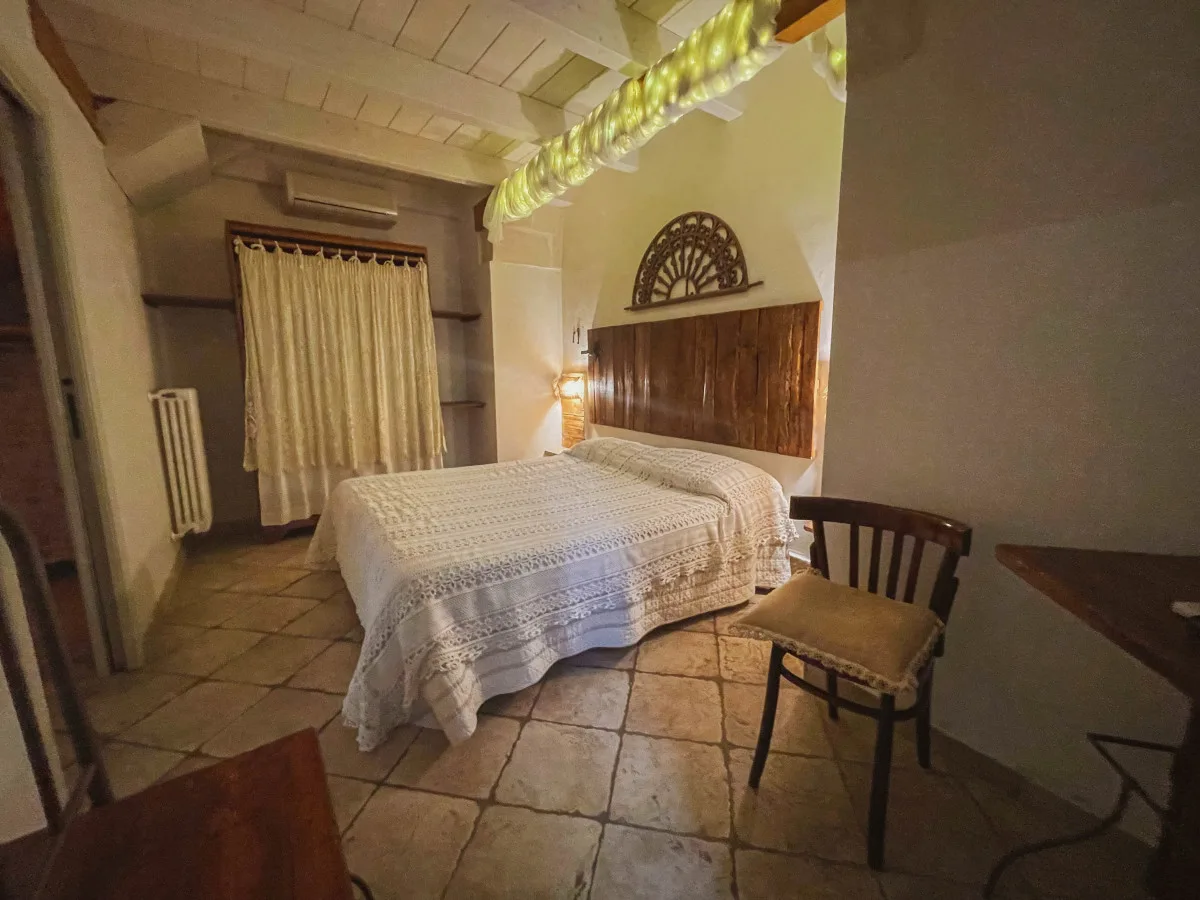
On the way up to the sleeping area, small frames hold canvases with views of the monuments of Massafra. The white of the damask bedspreads meets a headboard built from the doors of a hen house, set into the wall and completed by an iron door from the 1920s. The headboard and footboard of a wrought-iron bed, the crstìdd, become a desk and a bench.
On the mezzanine the single beds are dressed in crocheted blankets and lace. The small bedside table comes from an old restored crate used to carry Dreher beer. Woollen shawls, once the grandmothers’ shelter in winter, bring accents of colour and a familiar sense of warmth.
03 / 1920 style
The old cistern rediscovered
The bathroom was created over the old cistern-well attached to the house, brought back to light. On the floor of it a trompe-l’œil reproduces the water of a stream. A 1920s lantern lights the room from the ceiling, while an old ammunition box turns into a soap dish: here too, objects keep their own history while changing their use.