Massafra
& surroundings.
Why come, what to see, what to taste and how to get here: answers to the questions of anyone planning a trip to this part of Puglia.
Massafra is best discovered on foot: above, the alleys and the castle; below, the ravines with their painted churches.
All around, the sea, Taranto, Matera and the white towns.
WHY MASSAFRA
A town
carved by time.
Between the Ionian Sea and the Murge hills, Massafra is the heart of the Terra delle Gravine: a landscape of canyons, caves and rock-cut churches that few expect to find in Puglia.
Why choose Massafra for a holiday in Puglia?
Because within a few kilometres it brings together three different Puglias: the one of the ravines and rock-cut civilisation, the one of the Ionian Sea and the one of the white towns of the Valle d’Itria. Massafra is a real town, lived in all year round, far from the crowds of the better-known destinations.
It is also a convenient base: Taranto is about twenty minutes away, Matera and Alberobello less than an hour, the beaches a few kilometres. You can set off in a different direction every morning and come back to the same bed at night.
What makes Massafra unique?
The gravine: deep clefts in the limestone, like canyons, that run through the town. For centuries people lived and prayed in caves cut into their walls. Because of its many rock settlements and churches, Massafra is known as “the Thebaid of Italy”.
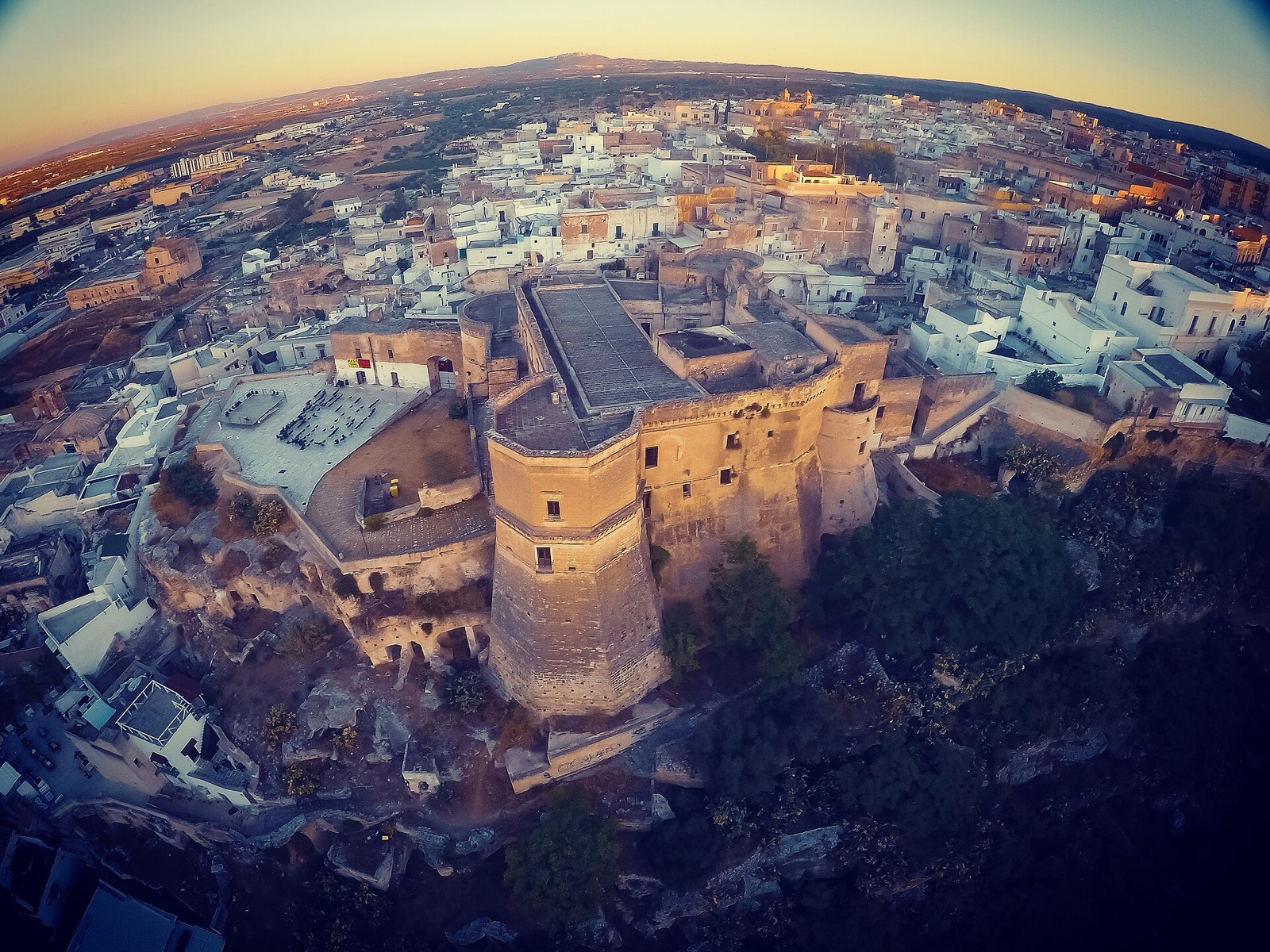
Above the ravine, the old town with its castle; all around, olive and citrus groves sloping down towards the sea.
Is Massafra a good choice for a quiet break?
Yes. It is a place for those who like to walk without hurry, step into churches and stop for a chat. Novecento is in the old town, in via Tito Speri: alleys, squares and monuments are all within walking distance.
WHAT TO SEE
Stone, frescoes
and silence.
Ravines, painted crypts, a castle on the edge of the void and a sanctuary at the bottom of the canyon: the places not to miss in Massafra.
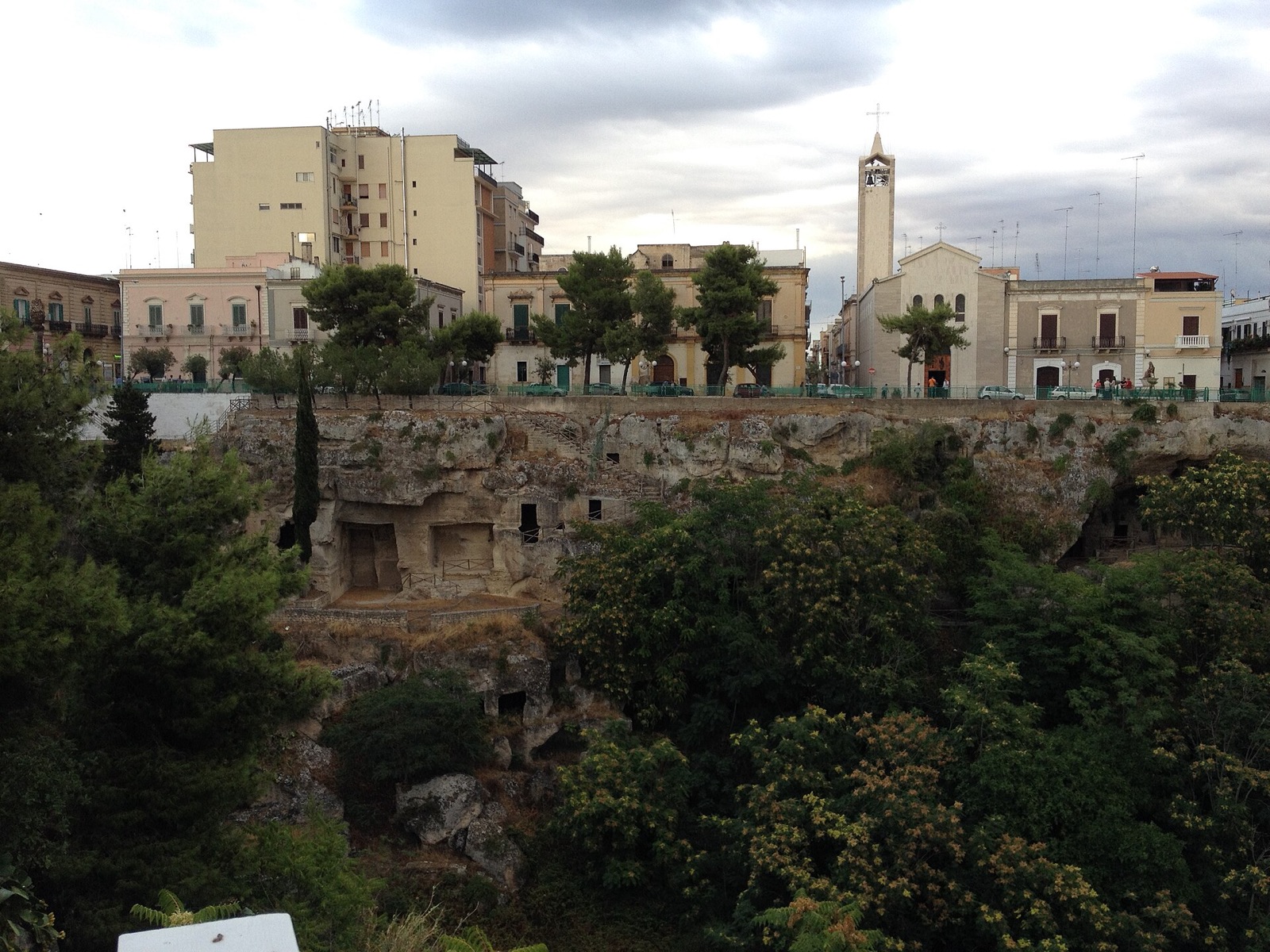
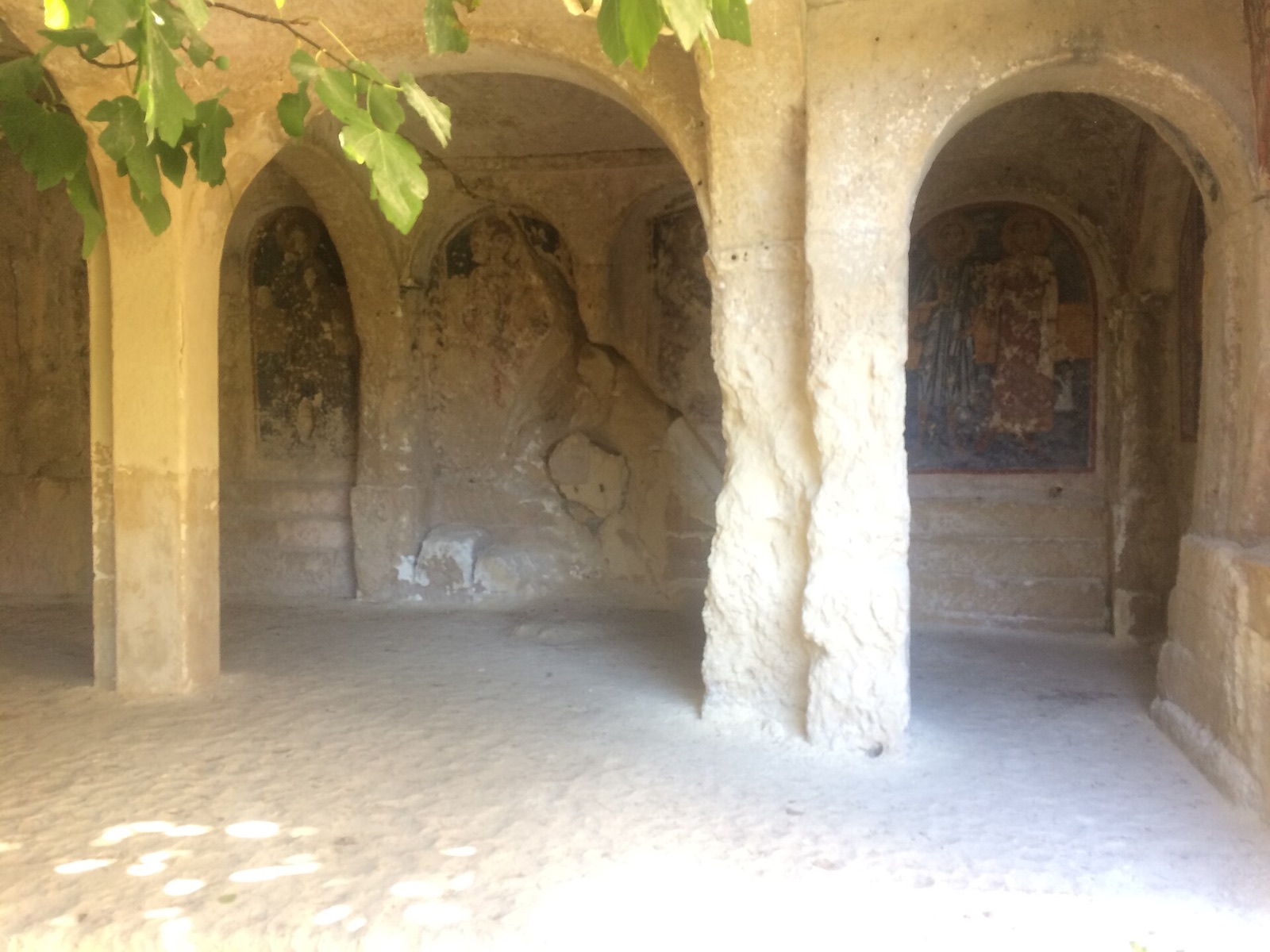
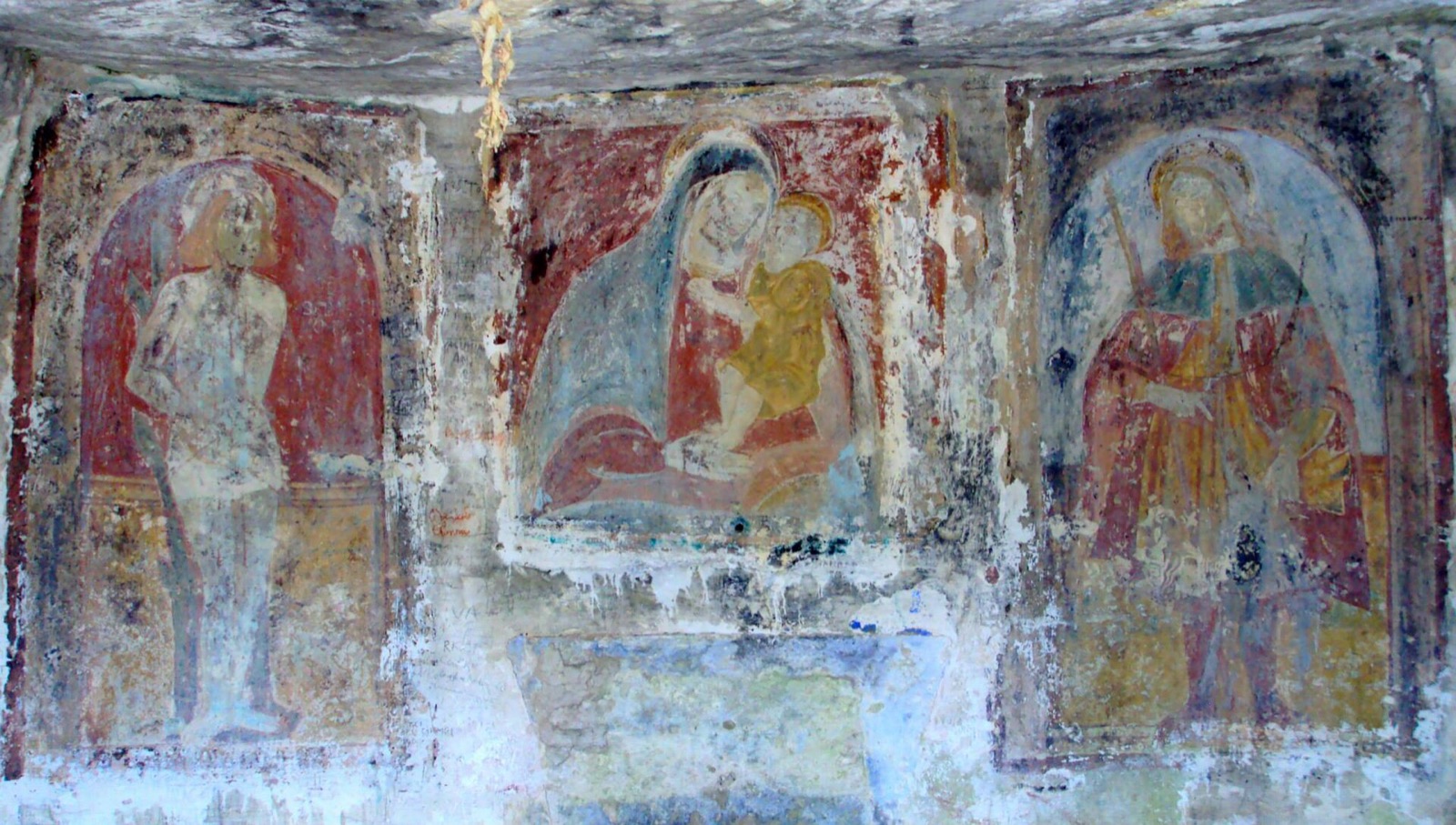
What are the gravine of Massafra?
They are canyons carved by water into the limestone. The two main ones cross the town: the Gravina San Marco, which separates the old centre from the nineteenth-century town and is spanned by bridges, and the Gravina della Madonna della Scala, wider and greener.
Along their walls are caves that were lived in until recent times, cisterns, stairways and entire churches cut into the rock. The ravines of Massafra are part of the Terra delle Gravine Regional Nature Park.
Which rock-cut churches can be visited?
Among the best known are the Crypt of the Candelora, the Crypt of San Leonardo, that of Sant’Antonio Abate, the Crypt of San Marco and the church of the Buona Nuova: spaces carved into the rock and decorated with frescoes in the Byzantine tradition.
Many crypts are kept closed and can be visited with a guide or by appointment. Ask us before you arrive: we will tell you how to arrange a visit.
What is the Sanctuary of the Madonna della Scala?
It is the sanctuary dearest to the people of Massafra, built at the bottom of the ravine that bears its name. You reach it by a scenic flight of steps, with the canyon opening up all around.
Next to the sanctuary are an older crypt and, not far away, the rock village with the so-called “Pharmacy of the Wizard Greguro”: a complex of connecting caves tied to a local legend.
Can you visit the castle of Massafra?
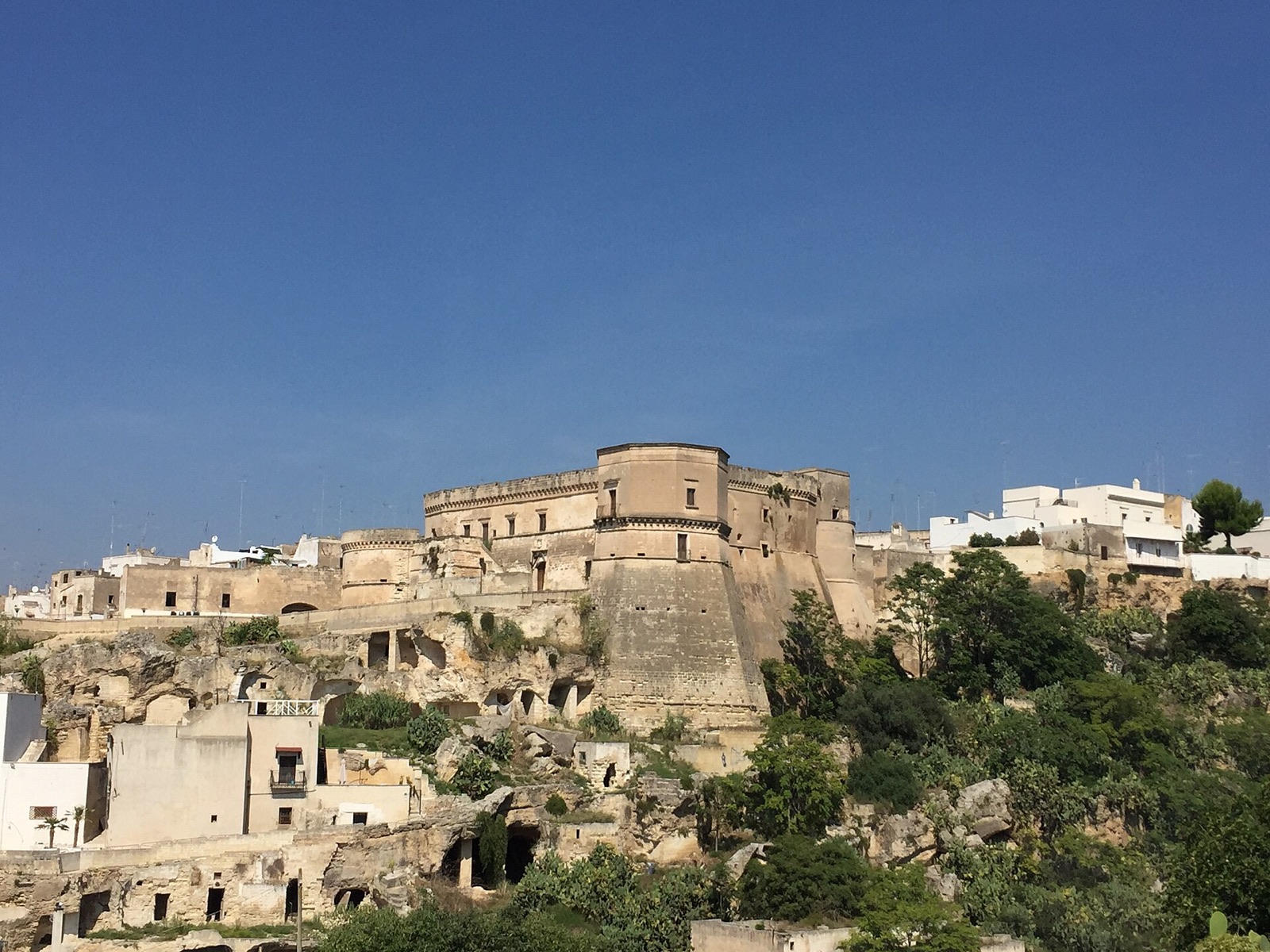
The castle, of medieval origin and altered several times, overlooks the Gravina San Marco with its octagonal tower. It is the symbol of the town and hosts cultural spaces; opening times change over the year, so it is best to check before visiting.
Even from the outside, the view of the castle from the bridge over the ravine is one of the finest images of Massafra.
What else is there to see in the centre?
The old town with its alleys, the clock tower, the churches and the Cathedral of San Lorenzo; the bridges over the ravine; the nineteenth-century palazzi. It is a walk you can do on foot, starting from Novecento.
A curiosity: in 1964 Pier Paolo Pasolini chose Massafra as one of the locations for “The Gospel According to St. Matthew”.
When is the Carnival of Massafra held?
During Carnival season, between February and March depending on the calendar. It is one of the best-known carnivals in Puglia, with parades of large papier-mâché floats and groups in costume. On parade days the town fills up: it is wise to book early.
NEARBY AND ACROSS PUGLIA
Every day,
a new direction.
From the sea at Taranto to the Sassi of Matera, from the trulli to ceramics: what you can reach from Massafra in a day.
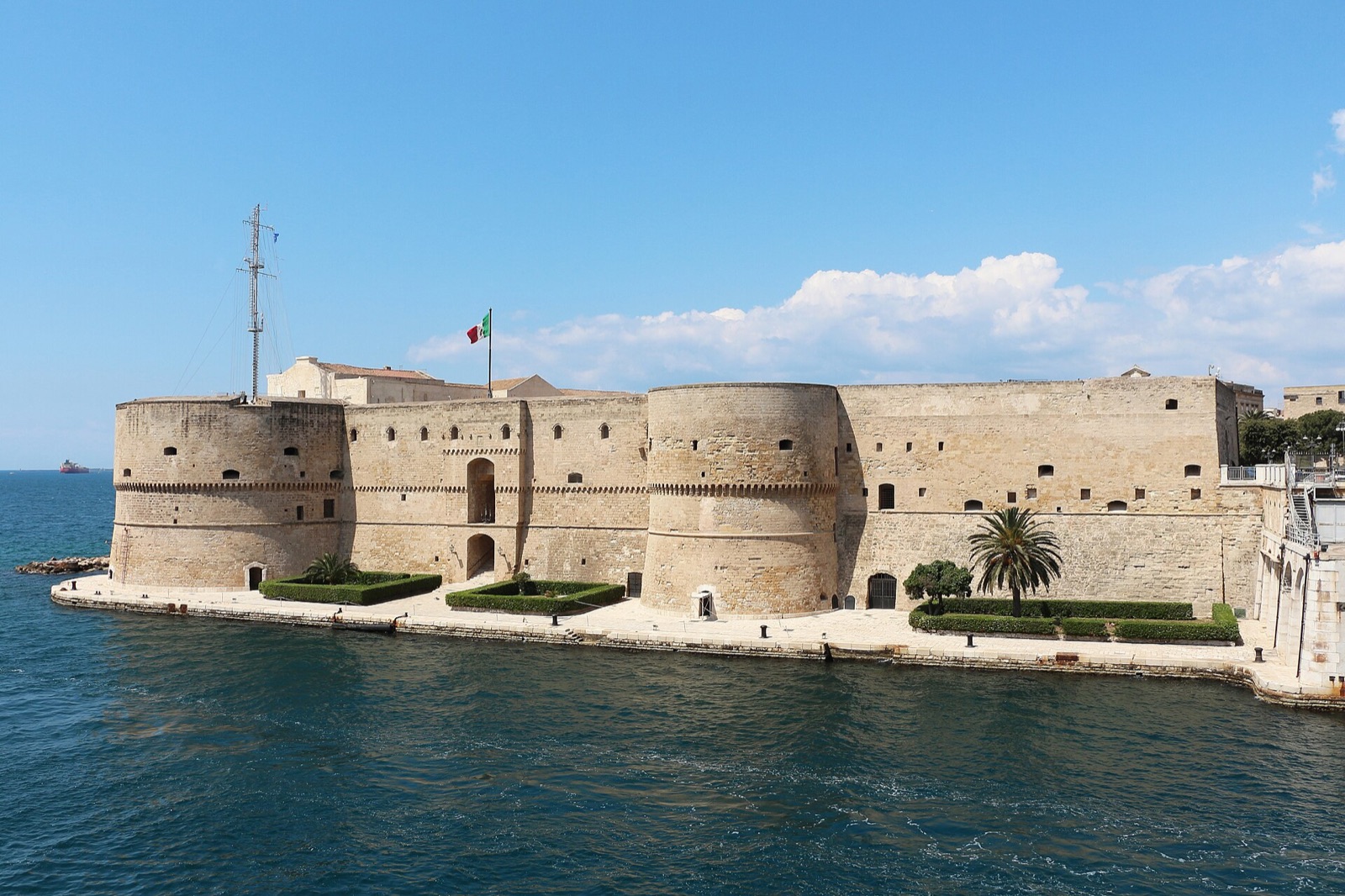
What is there to see in Taranto, a few minutes from Massafra?
Taranto is about twenty minutes by car. Not to be missed are the National Archaeological Museum (MArTA) with the gold of Taranto, the Aragonese Castle, the swing bridge and the old town on its island, between two seas.
During Holy Week the city is crossed by some of the most heartfelt processions in Italy.
Which other ravine towns are worth a visit?
Mottola, with its frescoed rock-cut churches; Castellaneta, perched above a deep ravine and birthplace of Rudolph Valentino; Laterza, with one of the largest canyons in Europe and its tradition of bread and oven-roasted meat; Ginosa and Palagianello, with their cave villages.
They are all a short distance away and can be combined in a single itinerary through the Terra delle Gravine.
How far is Matera from Massafra?
About an hour by car. The Sassi of Matera, a UNESCO World Heritage Site, are the natural next stop for anyone who has come this far following the rock-cut civilisation: the same world of stone, in another region.
Can you visit Alberobello and the Valle d’Itria in a day?
Yes. Martina Franca, with its Baroque centre, is about half an hour away; Alberobello with its trulli, a UNESCO site, about three quarters of an hour; a little further on are Locorotondo, Cisternino and Ostuni, the white city.
To the east, Grottaglie is the town of ceramics, with its quarter of workshops carved into the rock.
Where is the nearest beach?
A few kilometres away: Chiatona, the seaside village of Massafra, with its sandy beach and pine wood on the Gulf of Taranto. Further along the Ionian coast are Castellaneta Marina and Marina di Ginosa.
Those looking for the clear waters of Salento can reach the coast south of Taranto on a day trip.
FOOD
Flavours
of land and sea.
Olive oil, citrus fruit, bread, hand-made pasta and fish from the gulf: at the table Massafra tells of its position, between countryside and sea.
Which local dishes should you try?
Orecchiette with turnip tops or with meat sauce, broad bean purée with chicory, wild greens, focaccia and wood-fired bread. From the gulf come the mussels of Taranto, to be tried raw, gratinated or in tiella with rice and potatoes.
From inland come meat roasted “al fornello” and the cured meats of the Valle d’Itria, such as capocollo from Martina Franca.
Which local products are worth taking home?
Extra virgin olive oil, first of all: Massafra is surrounded by olive groves. Then citrus fruit: the clementines of the Gulf of Taranto have PGI status and ripen between autumn and winter.
And then taralli, fresh cheeses and the wines of the area, from Primitivo to the whites of the Valle d’Itria.
Where to eat in Massafra?
In the centre and nearby there are trattorias, pizzerias and masserie. We prefer to advise you in person, according to your tastes and the season: ask us when you arrive, or write to us before you leave.
GETTING HERE
Closer
than you think.
By car, by train or by plane: how to reach Massafra and how to get around once you are here.
BY CAR TO NOVECENTO
The right way in, no narrow lanes
Do not follow your sat-nav for the last few kilometres. To reach via Tito Speri, Google Maps and other sat-navs cut through the old town, along lanes too narrow for a medium or large car. The streets below are all wide.
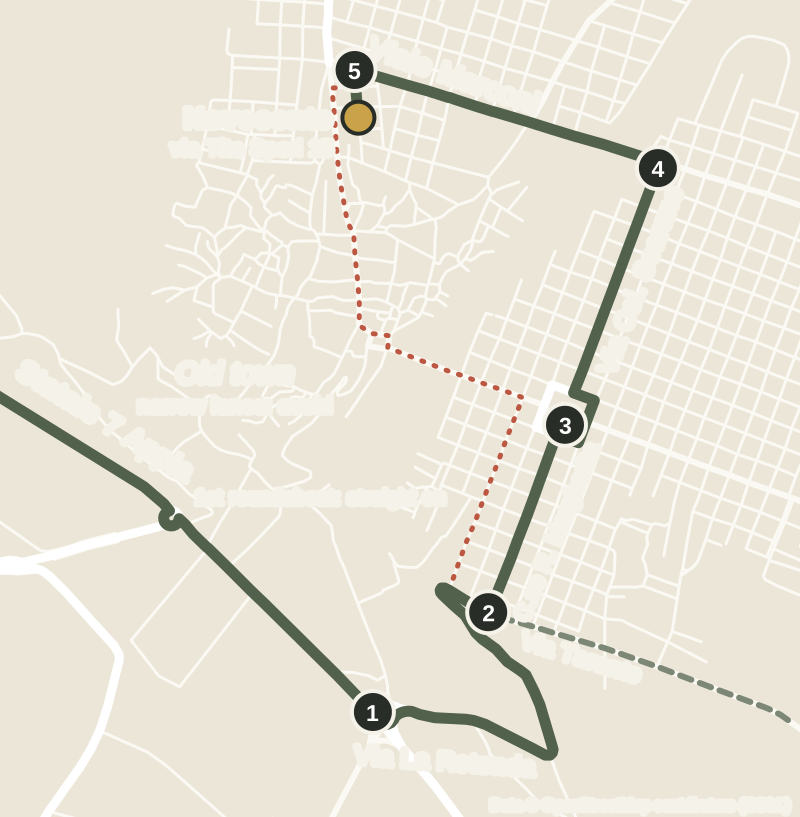
From Bari, Matera and the SS7 road, heading towards Taranto:
- At the second roundabout leave the main road and take via La Rotonda.
- Continue along Corso Regina Margherita.
- At the end, go round the square and carry on along via Colonnello Scarano.
- At the roundabout turn left onto viale Marconi and follow it for about 550 metres.
- Turn left into via Tito Speri: Novecento is at number 15.
Open the route in Google Maps
Also from Matera and Bari airport: this is the route described above.
Also from Brindisi, Lecce and Brindisi airport: from the SS7 road you enter along viale Magna Grecia and via Taranto as far as Corso Regina Margherita, then follow from step 2.
From Martina Franca you arrive along via del Santuario at the roundabout at the end of viale Marconi: take the avenue and turn right at once into via Tito Speri.
From Bari and Taranto your sat-nav will show a few intermediate stops: this is normal, they keep you on the wide streets. It will stop on viale Marconi at the corner of via Tito Speri: turn left there and you have arrived.
How do you get to Massafra by car?
From the north, take the A14 Bologna–Taranto motorway to the Massafra exit. From Bari, follow the SS100 state road towards Taranto. From Taranto, Matera and Brindisi, follow the SS7 Appia.
Novecento is at via Tito Speri 15, in the old town. For the last stretch follow the directions above, as sat-navs take lanes too narrow for a car; before you arrive we will also tell you where to leave it.
Can you arrive by train?
Yes. Massafra has a station on the Bari–Taranto line, served by regional trains. For long-distance trains the reference station is Taranto, a few kilometres away.
Massafra station is not in the centre: if you are arriving by train, let us know and we will help you arrange a transfer.
Which is the nearest airport?
The airports of Bari and Brindisi are both about an hour away by car. From there you can continue by rental car or by transfer, which we arrange on request.
Do you need a car to get around?
Not to visit Massafra: the old town, the castle and the viewpoints over the ravines can be explored on foot. For trips to the surroundings, the sea, Matera and the Valle d’Itria, a car is the most convenient option.
YOUR STAY
How long,
which season.
A few tips for planning your trip.
How many days do you need to visit Massafra and its surroundings?
For Massafra, one full day or two at an easy pace are enough. With three or four nights you can add Taranto, Matera, the Valle d’Itria and a day at the beach, without ever changing room.
When is the best time to come?
Spring and autumn are ideal for walking in the ravines and visiting towns and villages. Summer is the season of the sea and of evenings outdoors. Winter has Carnival, citrus fruit and a quieter pace.
Where to stay in Massafra?
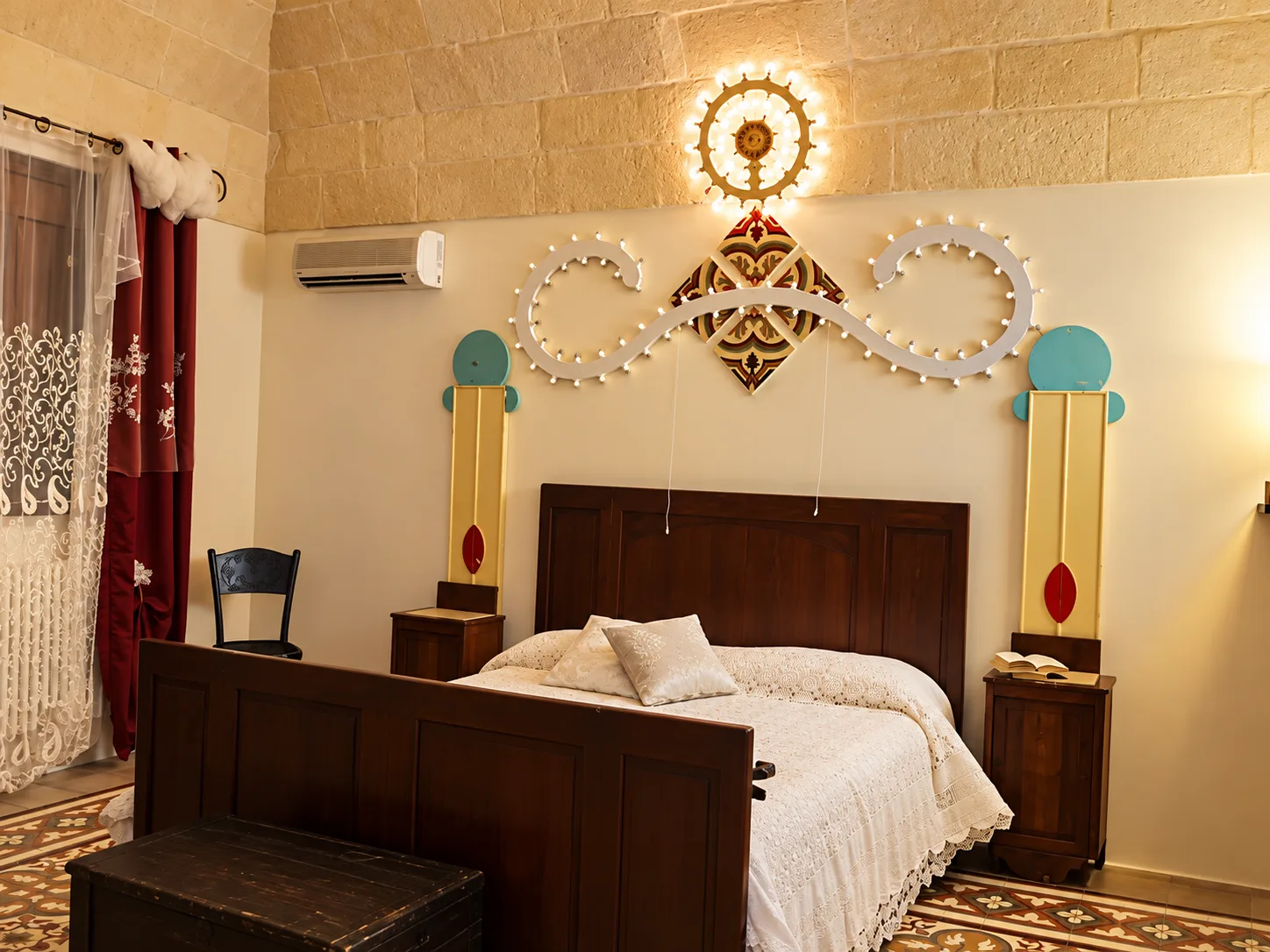
Novecento Room & Breakfast is an early twentieth-century house in the old town, with six places to stay, each set in a different decade: from double rooms to holiday homes for families.
YOUR STAY AT NOVECENTO
Come and see it
with your own eyes.
Six places to stay in an early twentieth-century house, in the old town of Massafra. Choose your dates and send us your request.
Travel times and distances are approximate. Opening times and visiting arrangements for monuments, crypts and museums may change: before your visit, check the official channels or ask us. Opening photograph: Photo2023, Wikimedia Commons (opens in a new tab), CC BY 4.0 (opens in a new tab).